Homeowner Guide
Why Roofs Leak in New Jersey: The 4 Weather Patterns Behind Most Leaks
Sayreville roofs do not fail randomly. Almost every leak we repair in Middlesex County traces back to one of four New Jersey weather patterns — and knowing which one is behind your leak tells you where to look.
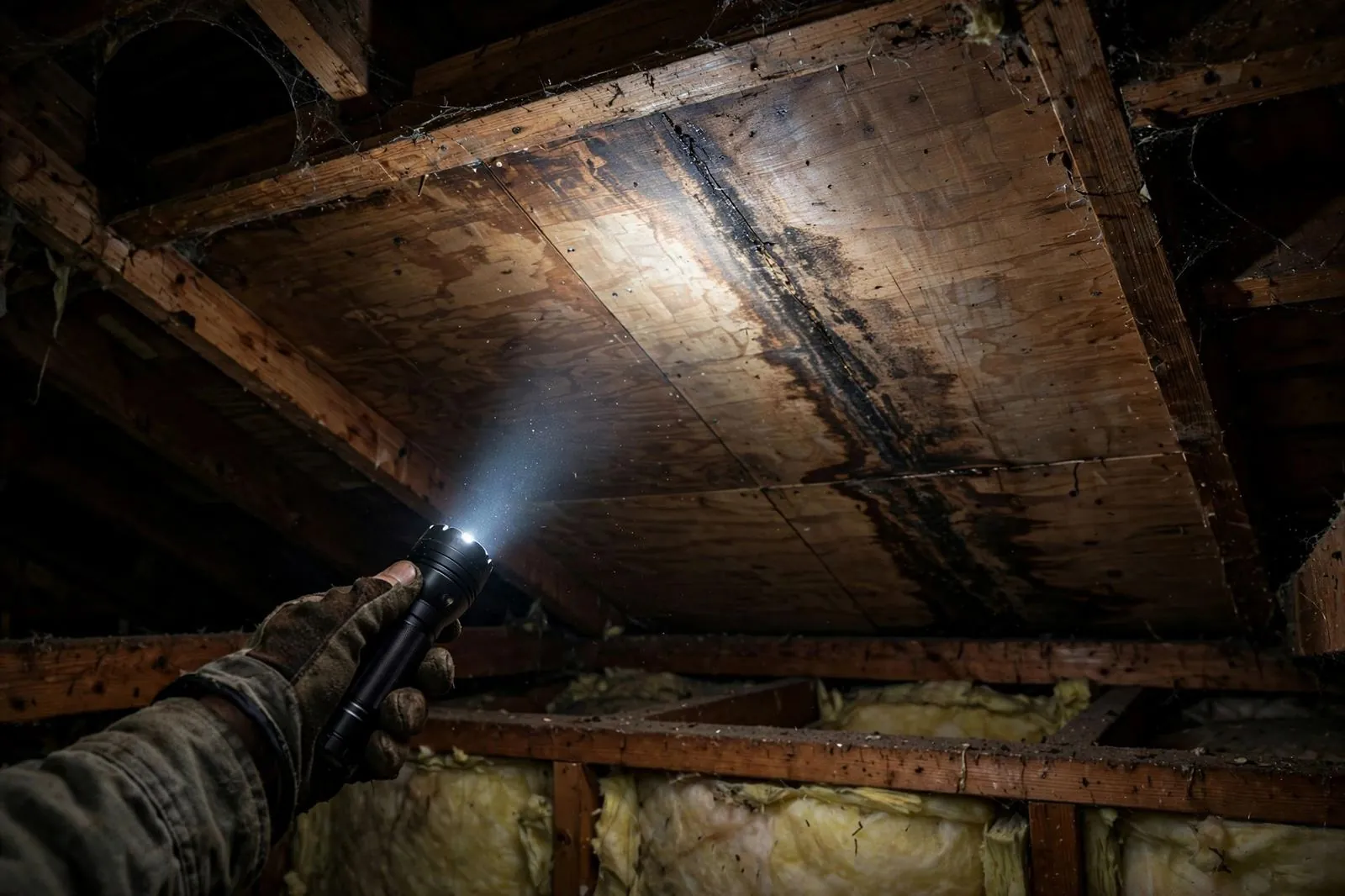
Nor'easters and wind-driven rain. Rain that arrives horizontally finds gaps that vertical rain never touches — under lifted shingles, through aging flashing, into ridge vents. Leaks that only appear during storms with strong northeast winds are almost always wind-driven entry points.
Freeze-thaw cycles and ice dams. Winter meltwater refreezes at cold eaves, building ice dams that force water backward under the shingles. This is why ice-and-water shield at the eaves matters so much on New Jersey roofs, and why leaks that appear only in deep winter usually start at the roof edge.
Summer humidity and thunderstorms. Hot, humid air ages asphalt shingles faster, and sudden summer downpours overwhelm clogged valleys and gutters. Water backing up in a debris-filled valley will find the nearest seam.
Hurricane remnants and storm surge. Sayreville learned this in 2012: tropical systems strip shingles, drive debris through roofs and flood low-lying neighborhoods like MacArthur Manor. Post-storm inspections catch the lifted and creased shingles that look fine from the ground but will leak in the next hard rain.
The pattern nobody blames: plain summer rain. Not every New Jersey leak needs a named storm. Ordinary summer downpours expose the slow failures - a vent boot cracked by a decade of sun, flashing sealant that finally let go, granules washed thin enough that water sits against the shingle mat. These leaks are quiet, seasonal and easy to blame on an old roof in general, when in fact they have one specific address on the roof. A stain that grows a little every summer is giving you the least dramatic and most fixable kind of warning there is.
Reading your own leak like a diagnostic. The weather pattern behind a leak is the best clue to its location, and you can read it yourself: leaks only in wind-driven rain point at lifted shingles and flashing on the windward side. Leaks only in deep winter point at the eaves and ice dams. Leaks after every rain, however gentle, point at an open detail - a boot, a valley, a chimney joint - that no longer sheds any water at all. Tell us which pattern matches yours when you call; it genuinely shortens the inspection, because it tells the roofer where to look first.
Why this matters more in Sayreville than elsewhere. Sayreville gets all four patterns at full strength: it faces Raritan Bay, so nor'easters arrive unbroken; it sits on the Raritan River, adding flood and surge history in the low neighborhoods; its winters deliver genuine freeze-thaw; and its housing stock - much of it built between the 1940s and the 1990s - is at the age where the small parts fail first. That combination is why leak repair here rewards finding the true source over patching the symptom, and why a roof that would cruise in a milder climate needs its details checked on a New Jersey schedule.
Putting the four patterns together. Real leaks often involve two patterns holding hands: a summer of humidity ages a boot until it cracks, then a nor'easter's driven rain is what finally pushes water through it. The winter stain gets blamed on ice, the autumn drip on the storm - but the underlying failure is usually a small part at the end of its life, opened by whichever weather arrived next. That is why pattern-reading narrows the search but the inspection still checks every detail uphill of the stain. Roofs leak for reasons, and in New Jersey the reasons repeat - which is good news, because repeated reasons have known fixes.
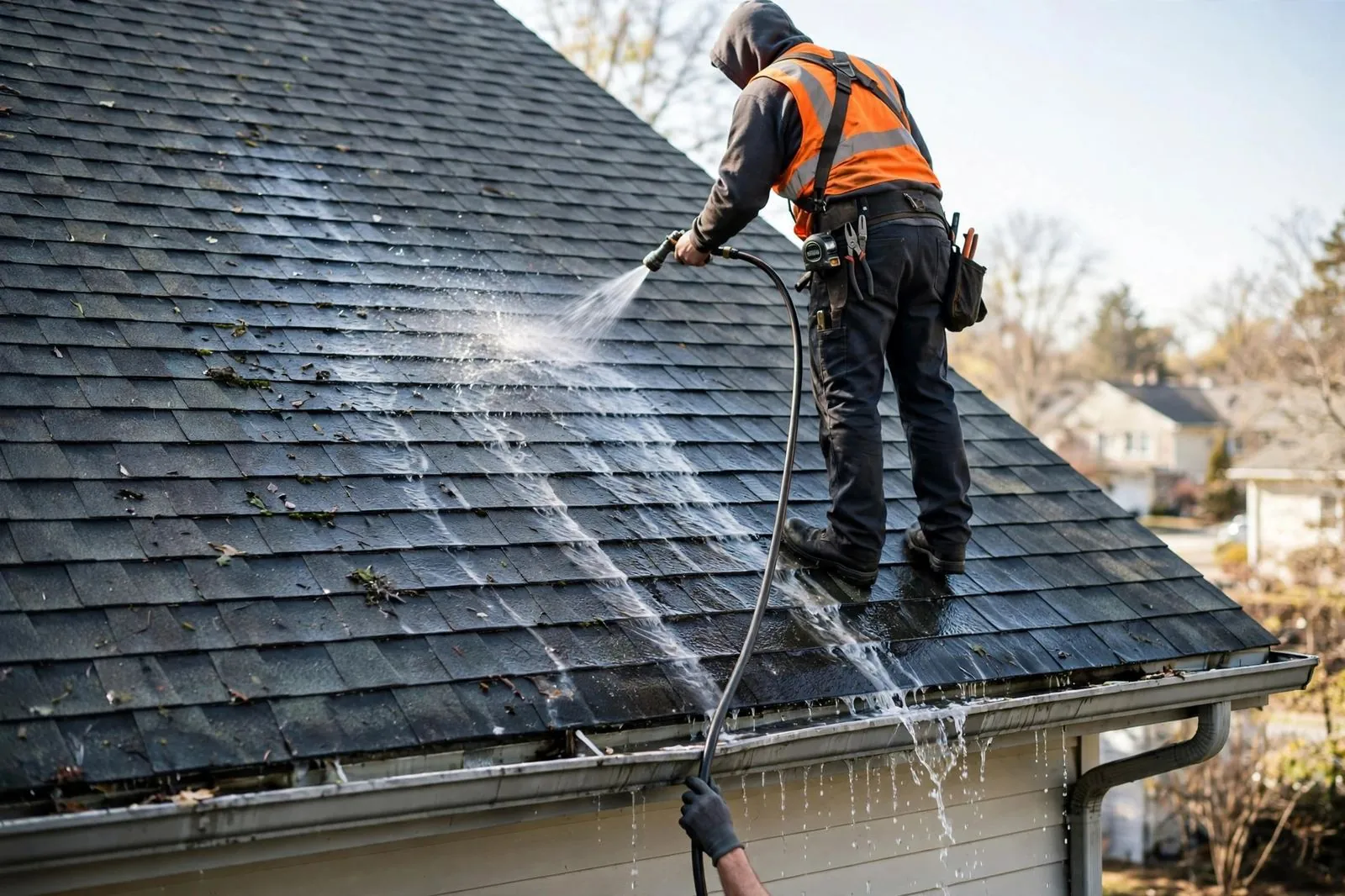
Noticing any of this on your own roof? Call (732) 555-0142 and describe it - an inspection will tell you exactly where you stand.
Call (732) 555-0142If any of this sounds familiar, an inspection will tell you where you stand. Call (732) 555-0142 to schedule one anywhere in Sayreville.
Dealing with a roof leak in Sayreville right now?
Call and tell us where the water is coming in. We will walk you through the first steps and schedule your inspection.
Call (732) 555-0142