Homeowner Guide
5 Signs Your Roof Is Leaking (Before the Drip Starts)
Most homeowners discover a roof leak when water stains the ceiling — but by then, the roof has usually been leaking for weeks. Here are the earlier signs Sayreville homeowners should watch for.

A musty smell in the attic or closets. Moisture collecting in insulation and decking produces a musty odor long before it drips. If a room under the roof smells damp after rain, water is getting in somewhere.
Shingle granules in the gutters. Asphalt shingles shed granules as they age. A handful in the gutter is normal after a storm; a steady buildup means the shingle surface — your roof's waterproof layer — is wearing thin.
Lifted, curled or missing shingles. From the ground with binoculars, look for shingles that no longer lie flat, especially on the side of the roof facing the Raritan Bay winds. Lifted tabs let wind-driven rain underneath.
Staining around bathroom vents and the chimney. These are flashing points, the number one leak source on older Sayreville homes. A faint brown ring on the ceiling below a bathroom often traces to a cracked vent boot, not the roof field at all.
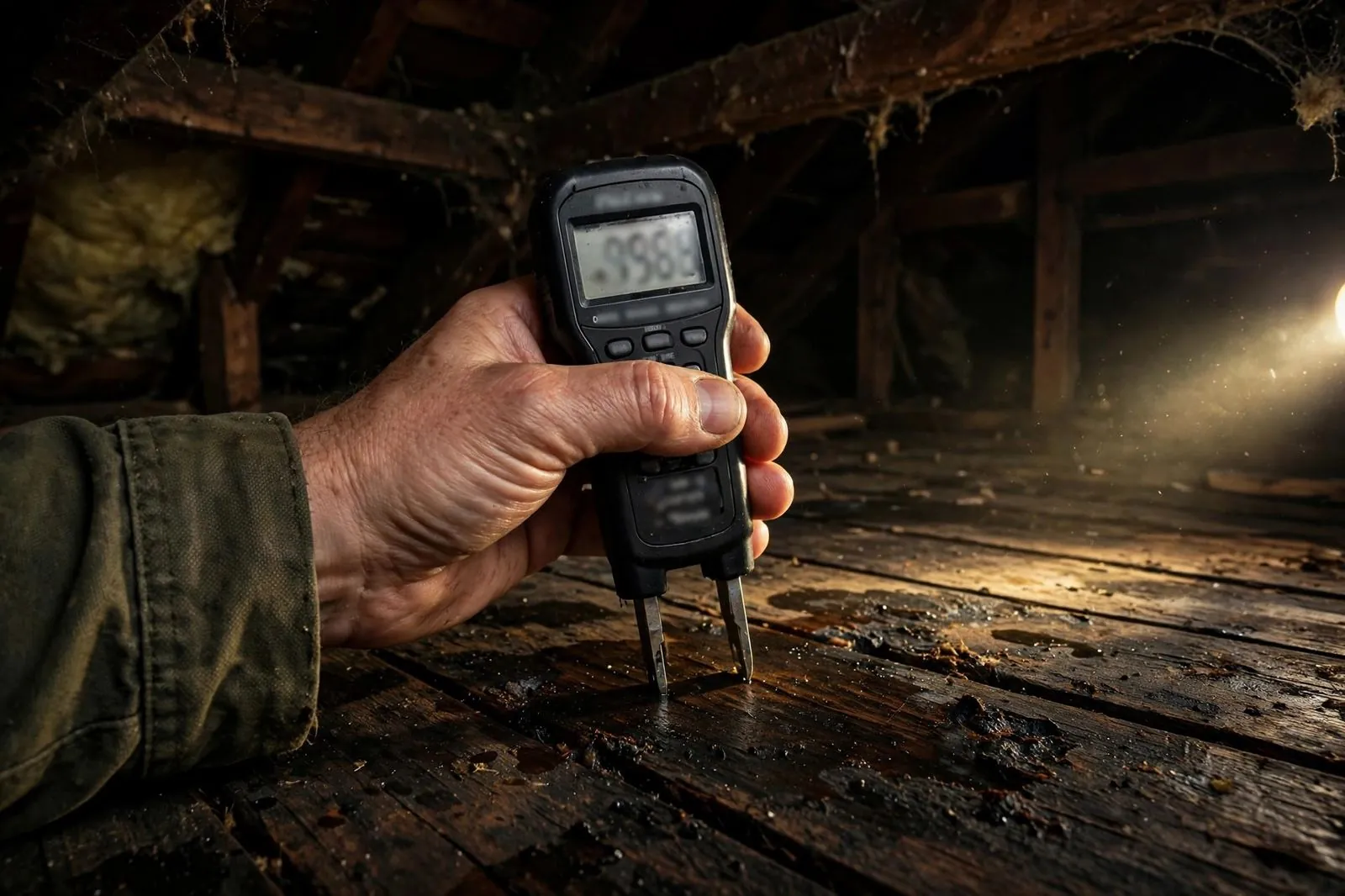
Daylight or water trails in the attic. After rain, take a flashlight into the attic. Shiny trails on the underside of the deck and damp insulation mark the leak's path — and they are far easier to spot in the attic than on the ceiling below.
Paint bubbling high on a wall. When water gets into the wall cavity from a roof leak above, it often shows as bubbling or peeling paint near the top of the wall below the roofline, sometimes in a room with no ceiling stain at all. Homeowners repaint it; the bubble returns after the next wet month. If paint keeps failing in the same high spot, look up - the source is usually the flashing or eave directly above it, and no amount of interior paint will hold until the entry point on the roof is sealed.
Your energy bills crept up. Wet insulation barely insulates. A slow leak soaking the attic insulation over a bedroom can raise heating and cooling costs for that part of the house long before a stain appears. If one room is suddenly harder to heat or cool and the attic above it smells musty, the two facts are probably the same fact. An attic inspection with a moisture meter settles it in one visit - and drying or replacing soaked insulation is part of a proper leak repair, not an afterthought.
What to do when you spot a sign. Do not wait for the drip. Photograph what you found, note when it appeared, and call for an inspection while the evidence is fresh - water trails and moisture readings are clearest in the days right after rain. Most early-stage leaks in Sayreville trace to one failed detail - a boot, a flashing line, a lifted shingle section - and are repaired in a single visit. The homeowners who pay the most for leaks are almost never the ones who called at the first sign; they are the ones who waited for certainty and got it, expensively, through the ceiling.
A note on timing: signs cluster. One sign alone can be a false alarm - granules after a hailstorm, a musty day in August. What should move you to call is a pattern: two or three of these signs together, or any one of them that is getting worse month over month. Leaks announce themselves in clusters because the same aging that cracks a vent boot is lifting shingles three feet away. The inspection reads the whole pattern at once, which is why a single visit usually explains everything you have been noticing - including the sign you had not connected to the roof at all.
Noticing any of this on your own roof? Call (732) 555-0142 and describe it - an inspection will tell you exactly where you stand.
Call (732) 555-0142If any of this sounds familiar, an inspection will tell you where you stand. Call (732) 555-0142 to schedule one anywhere in Sayreville.
Dealing with a roof leak in Sayreville right now?
Call and tell us where the water is coming in. We will walk you through the first steps and schedule your inspection.
Call (732) 555-0142