Homeowner Guide
Roof Leaking During a Storm? Do These 5 Things First
It is 2 a.m., a nor'easter is hammering Sayreville, and water is coming through the ceiling. Here is the order of operations that limits the damage until a roofer can safely get on your roof.
Contain the water. Move furniture and electronics out of the drip zone and put a bucket under the leak. If the ceiling paint is bulging, poke a small hole in the center of the bulge with a screwdriver — it releases the water in one controlled spot instead of letting it spread across the whole ceiling.
Protect the attic floor if you can do it safely. If your attic is accessible and the floor is dry enough to walk, a tarp or plastic sheeting under the leak keeps insulation from soaking through. Never climb into an attic during lightning.
Take photos and video. Document the leak, the stains and any damaged belongings while it is happening. This documentation is exactly what your insurance company will ask for later.
Stay off the roof. A wet roof in storm winds is genuinely dangerous, and walking on wet shingles can cause more damage. Emergency tarping is a job for a crew with the right equipment once conditions allow.
Call for emergency repair. Describe where the water is coming in and whether it is still active. An emergency roofer will secure the opening with tarping and temporary sealing first, then schedule the permanent repair when the weather clears.
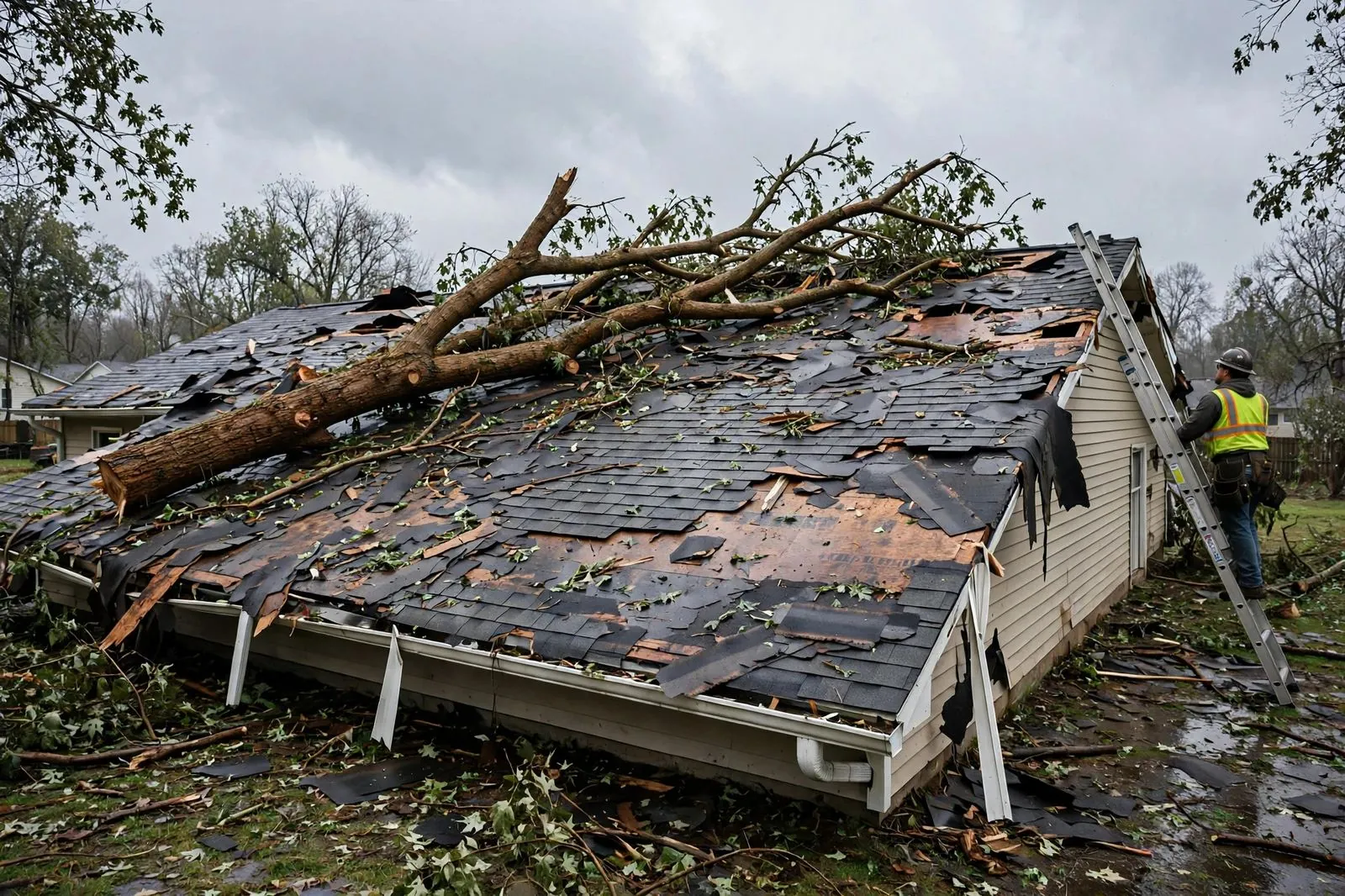
Know when to suspect hidden damage. Not all storm damage drips the same night. Wind-creased shingles can look flat from the ground and still have broken seals that admit the next storm's rain; a leak that first appears two storms after the big one is a classic pattern. If your street lost shingles or a neighbor's roof was tarped, treat your own roof as suspect until an inspection clears it - especially on the slope that faced the wind, and especially if the roof is past its tenth year, when sealant strips have less grip to begin with.
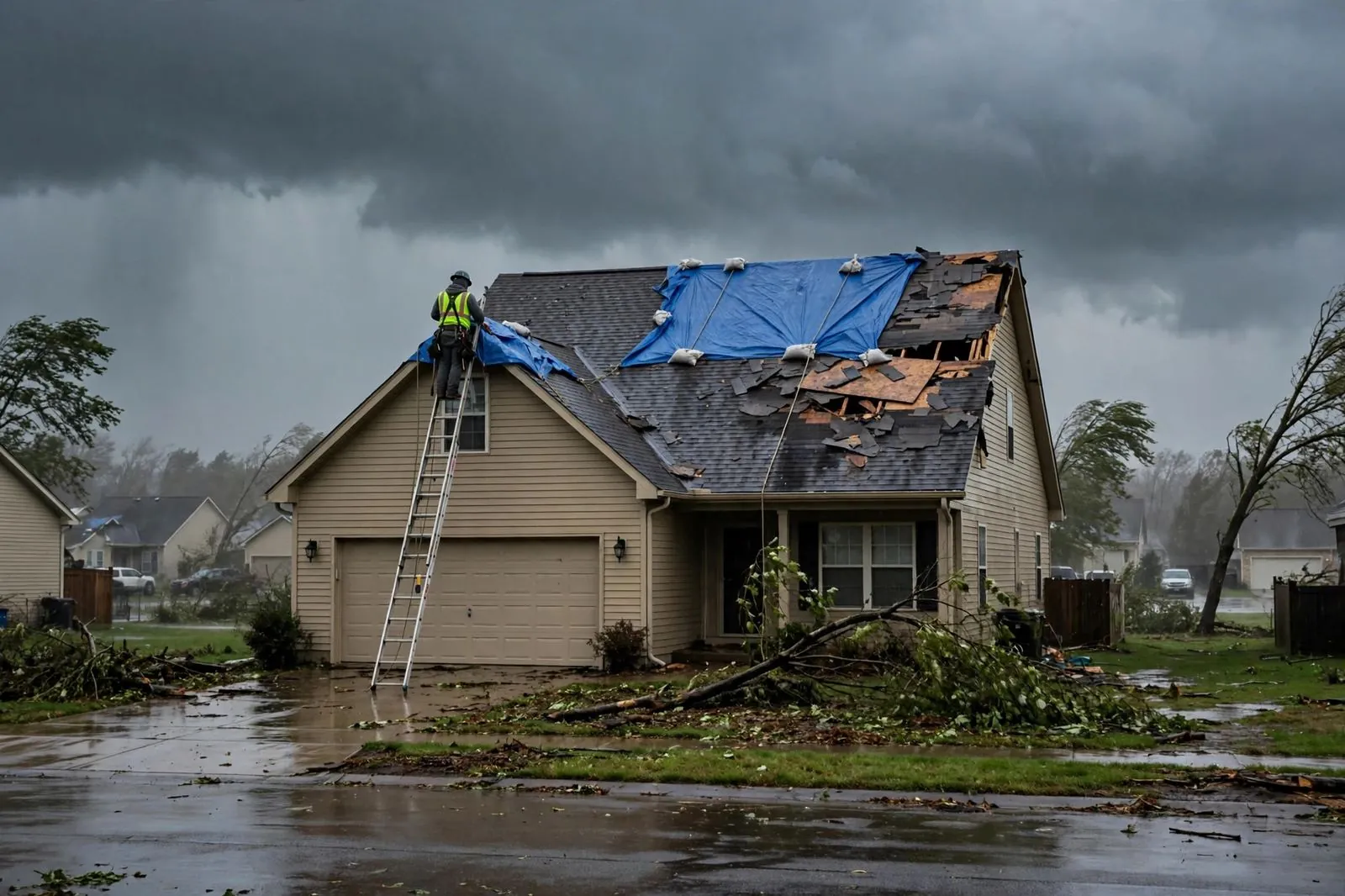
What an emergency visit actually involves. When you call, describe where the water is coming in and whether it is still active; that decides the first move. The crew's first job is stopping the water - tarping or temporary sealing fitted over the ridge and anchored at the edges, not a sheet flapping over the hole. Everything is photographed before and after for your insurance record. The permanent repair is then quoted in writing and scheduled once the roof is dry and safe to work on. You should never be asked to approve a full repair price in the middle of the emergency itself.
After the storm: the quiet checks. Once the weather clears, walk the property for shingle pieces and check the attic after the first rain - stains that were invisible during the storm often appear then. Clear debris from valleys before the next rain sits in it. And keep every photo and receipt together: insurers expect homeowners to prevent further damage, and a documented fast response is the strongest position you can file from. If anything on this list is beyond what you can safely do from the ground, that is exactly what the inspection visit is for.
A note on tarps: what good looks like. A proper emergency tarp is not thrown over the hole and weighted with whatever is nearby. It runs over the ridge so water cannot get under its top edge, it is anchored with boards screwed through the tarp's edge into the decking, and its bottom edge sheds water onto sound shingles below the damage. A tarp installed that way survives follow-up rain for weeks. A loose blue sheet survives until the next gust. When the crew leaves, look at the edges: flat, boarded and quiet in the wind is what you are paying for - and photograph it for your records.
Noticing any of this on your own roof? Call (732) 555-0142 and describe it - an inspection will tell you exactly where you stand.
Call (732) 555-0142If any of this sounds familiar, an inspection will tell you where you stand. Call (732) 555-0142 to schedule one anywhere in Sayreville.
Dealing with a roof leak in Sayreville right now?
Call and tell us where the water is coming in. We will walk you through the first steps and schedule your inspection.
Call (732) 555-0142